My Blog tutorial cookies step by step, Learn more about the world´s food throughout history at the Alimentarium. Animations. To feed curiosity. News and more. Discover our content. Alimentarium's Mag. Exhibitions. A Museum for Gourmands. All about food. Types: Articles, Videos, Dossiers, Magazine

Pita Recorder

https://www.youtube.com/channel/UCPWDdoJeLTatlrOuaC7yHcw

Mining Free Bitcoin

https://globadino.com/?ref=199840 https://halfmining.com/sign-up/?reference=argan92 https://mineex.biz/ref/argan92

Search This Blog

Powered by Blogger.

Pages - Menu

Herb and Garlic Roasted Potatoes

April is Potato Month. How will you celebrate? At Food and Health Communications, we’ll be whipping up some of these amazing herb and garlic...

Contact Form

Name

Email *

Message *

Popular Posts

A journey through levels of food & fitness


I will be the first one to admit — I go through phases with food. I will be mega-obsessed with a certain food, eat it more or less nonstop for months, and then get tired of it and stop completely. (I do this with a lot of things — TV shows, music, etc.) Anyone else?


I went through a phase when all I did was eat oats…every. single. day. From my go-to (<– early Levels post alert!) to, I had a love affair with oats.


Then, I entered my pancake phase. , apple cinnamon pancakes, honey almond flax pancakes…the list goes on and on.


Then, it was the it’s-too-hot-to-eat-so-I’ll-stick-to-cold-foods-for-breakfast-please phase. It was pretty much defined by my PB & (Strawberry) J bowl, which happens to be delicious any time of day.


Maybe I’m going full circle because I’ve been all about oats again lately. Especially when they look like this…


Although it’s a “hot” breakfast, the fresh blueberries and blueberry jam make it just summery enough to work. If you love the taste of sweet blueberry pie, you’ll love this blueberry pie oatmeal!


Blueberry pie oatmeal

Serves 1


1/2 c. oats

1 egg white

2/3 c. liquid (I used unsweetened vanilla almond milk + water)

1/2 c. fresh blueberries

1 tsp. blueberry jam

In a small pan, add oats and liquid. Turn up the heat and allow oats to absorb water.

Once most of the water is absorbed, stir in your egg white and continue stirring until cooked.

Remove from heat, place in a bowl, top with fresh blueberries, and blueberry jam.

If desired, top with additional toppings! I used a scoop of peanut butter and a sprinkle of hemp seeds.

How to level up this recipe:


For added protein, add 1/2 scoop of vanilla protein powder.

How to level down this recipe:


For added sweetness, use 1 Tbsp. brown sugar (or agave).

Do you ever go in phases with foods? What’s your latest phase?


Date

Tags,

Comments

Food Poisoning Signs


Food Poisoning Signs

How do you know if you have food poisoning? Common food poisoning signs are:
- Nausea
- Vomiting
- Stomach Cramps
- Diarrhea
- Fever
- Dry mouth
- Dizziness or Fatigue
Although there are several types of food poisoning, the signs are all quite similar but the duration may vary. You can start to see signs of food poisoning usually a couple of hours after eating 6-12 hours at the most.
If the signs of food poisoning remain harmless then you can most likely get treated at home, rest and lots of fluids are vital.
But if the signs of food poisoning become worse or you start to experience severe dehydration then it is best you seek medical attention.
Food poisoning can last anywhere from 2 days to 2 weeks. If you see that the signs of food poisoning to not diminish or go away after 2 weeks then you may have a severe case of food poisoning and should seek medical advice.

Food Poisoning Remedies


 Food Poisoning Remedies

You never know when you might get food poisoning. As you eat your meal you are unaware of the food poisoning symptoms that are to follow.

Most food poisoning cases can be treated at home with food poisoning remedies and will only last a couple of days.

The best food poisoning remedy is getting rest. By resting you allow your body to fully focus on healing itself and defending itself from the bacteria.


Aside from resting, you should also keep a light diet. This means drinking lots of water and preferably avoiding sweet drinks and soda. A great food poisoning remedy is limiting yourself to just soups while you are sick and keep them at room temperature as foods that are too hot or too cold can cause vomiting or nausea.


Since common symptoms of food poisoning are diarrhea and vomiting, it is important you always stay hydrated as well. You can also take over-the-counter remedies for stomach pain and diarrhea as well.


Other food poisoning remedies are:


- Drink herbal teas such as mint, raspberry or chamomile tea.

- Eat bread, it soaks up the poison and provides fast relief.

- Drink water with a tablespoon of apple cider vinegar.


Many have found the best food poisoning remedies to be rest and drinking plenty of fluids. However, if your food poisoning symptoms are lasting more than a week then it is best you consult with your doctor for treatment.


Prevent Food Poisoning


 Prevent Food Poisoning

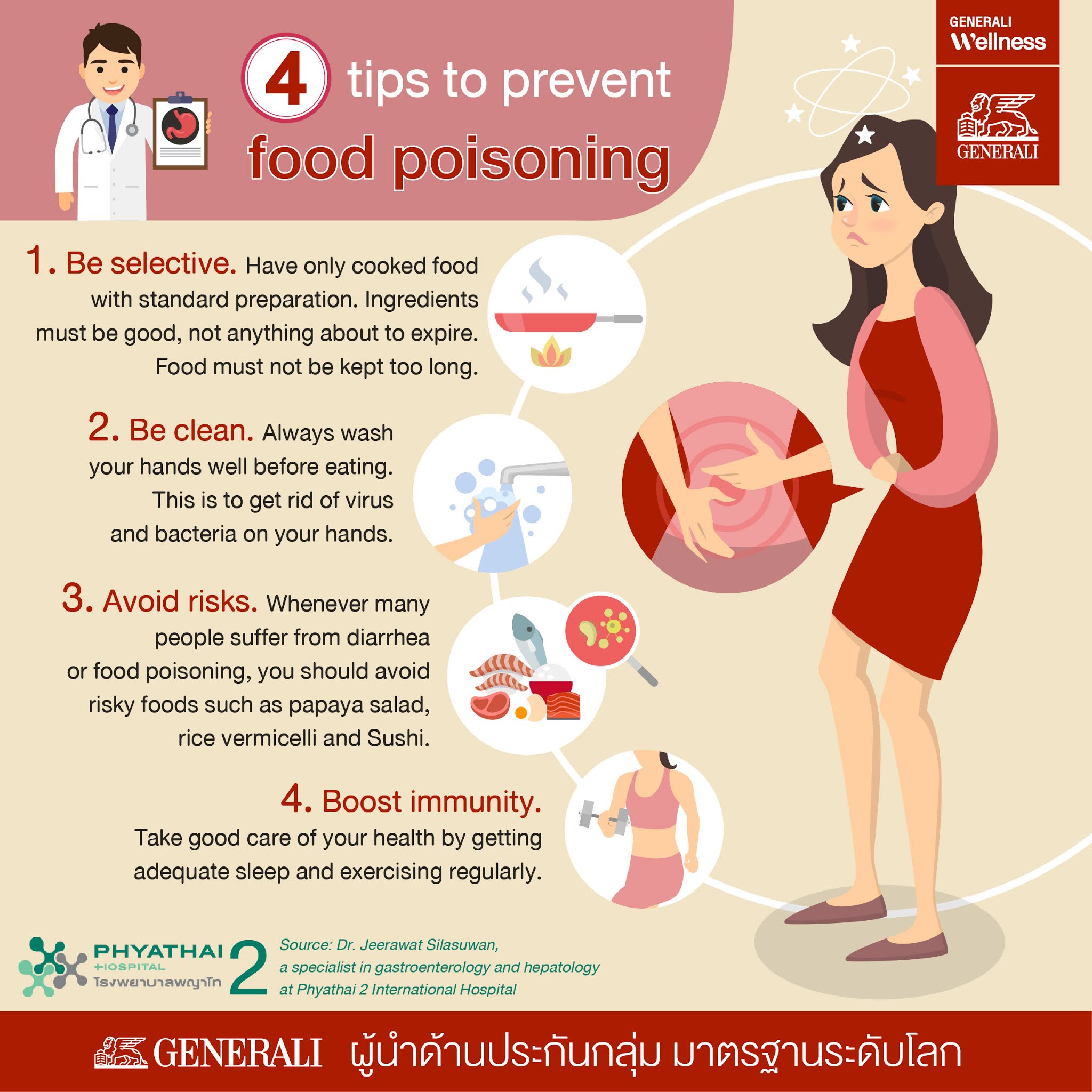
https://generali.co.th/en/wellness-content/food_poisoning/


It is very important you know how to prevent food poisoning at home and when eating out. Food poisoning symptoms can be very painful and knock you out for a couple of days, preventing food poisoning will let you enjoy a healthy meal at home and out.


Food poisoning occurs a lot during summer, this is because bacteria spreads quicker in warmer temperatures, that is why it is crucial that you store your food at home in a cold room or refrigerator.


Foods that should go in the Refrigerator:


- Meats, Poultry

- Vegetables

- Fruits

- Dairy Products


Also, always make sure to check the expiration date of dairy products such as milk and cheese. Canned foods can also be a source of food poisoning, so make sure to check the expiration date on these as well and keep them in a dry, cool area.


Foods, of course, cause food poisoning but so can you. Lack of hygiene when cooking and handling foods can cause food poisoning as well. Make sure to always wash your hands before cooking and during cooking as well.


A couple of other things you should keep in mind to prevent food poising are:


- Only buy food from clean restaurants

- Make sure your food containers are always clean, throw out old, stained containers.

- Keep the kitchen area clean

- Always wash your hands before and during cooking

- If you have any cuts wear gloves when preparing foods

- Prevent eating leftovers


As you can see, preventing food poisoning is really just a matter of keeping your eating area hygienic at home and when you go out to eat as well.


About Food Poisoning


Welcome to About Food Poisoning 

Who doesn't love to indulge in their favorite food? Or go out and pick the food that they are craving at the moment. However many are not aware of the dangers of food poisoning or if you already have food poisoning what treatments are there?


Food poisoning affects 1 out of every 10 people! The truth is food poisoning is widely spread through incorrect storage of foods, unclean preparation, or even from the source of the food which can be already contaminated with bacteria and germs that lead to food poisoning.


Though most food poisoning cases are mild and treatable at home, there is botulism food poisoning which can be fatal.


Learn about the causes of food poisoning, food poisoning symptoms, food poisoning treatments, and how you can prevent food poisoning as well.


Food Poisoning Symptoms

There are different types of food poisoning and the symptoms vary depending on which food poisoning has taken effect. However common food poisoning symptoms are vomiting, nausea, diarrhea, and stomach cramps.

If someone is experiencing food poisoning symptoms it will usually pass in 1-2 days and can be treated at home, but it if lasts longer or pain increases it is important you seek medical attention.

One of the most common types of food poisoning is salmonella, and the symptoms are very similar to those of flu but they may last for up to a week.


Botulism food poisoning symptoms are not noticeable sometimes for up to 2 days after the food was eaten. These food poisoning symptoms can be dry mouth, vomiting, stomach pain, nausea, and sometimes blurry vision as well. But that is only the beginning; botulism is the worst of food poisoning as it can lead to loss of muscle movement and in worst cases death.

Staphylococcal food poisoning symptoms can occur 6 hours after eating. Common foods that cause these food poisoning symptoms are fish, dairy, and pastry products. The food poisoning symptoms can be stomach cramps, vomiting, fever, and diarrhea.

Food poisoning symptoms should be taken seriously, and it is best to get diagnosed by a doctor to know what type of food poisoning you have.

If your food poisoning symptoms are minimal then you can take care of yourself at home, but if you notice an increase of severity of food poisoning symptoms then it is best you see your doctor to get the correct treatment.

About Eating Disorders


Eating is controlled by many factors, including appetite, food availability, family, peer, and cultural practices, and attempts at voluntary control. Dieting to a bodyweight leaner than needed for health is highly promoted by current fashion trends, sales campaigns for special foods, and in some activities and professions. Eating disorders involve serious disturbances in eating behavior, such as extreme and unhealthy reduction of food intake or severe overeating, as well as feelings of distress or extreme concern about body shape or weight. Researchers are investigating how and why initially voluntary behaviors, such as eating smaller or larger amounts of food than usual, at some point move beyond control in some people and develop into an eating disorder. Studies on the basic biology of appetite control and its alteration by prolonged overeating or starvation have uncovered enormous complexity, but in the long run, have the potential to lead to new pharmacologic treatments for eating disorders.

Eating disorders are not due to a failure of will or behavior; rather, they are real, treatable medical illnesses in which certain maladaptive patterns of eating take on a life of their own. The main types of eating disorders are anorexia nervosa and bulimia nervosa. A third type, binge-eating disorder, has been suggested but has not yet been approved as a formal psychiatric diagnosis. Eating disorders frequently develop during adolescence or early adulthood, but some reports indicate their onset can occur during childhood or later in adulthood.

Eating disorders frequently co-occur with other psychiatric disorders such as depression, substance abuse, and anxiety disorders. Besides, people who suffer from eating disorders can experience a wide range of physical health complications, including serious heart conditions and kidney failure which may lead to death. Recognition of eating disorders as real and treatable diseases, therefore, is critically important.

Females are much more likely than males to develop an eating disorder. Only an estimated 5 to 15 percent of people with anorexia or bulimia and an estimated 35 percent of those with binge-eating disorder are male.